
ITM / THE ROUTE
The modern Silk Road is a system of controlled checkpoints.
The Silk Road. Without the fog.
China → ITM control → Belarus → Russia, Europe, Asia, and beyond. Long-distance geography becomes a short chain of responsibility.
01 / Seven stages
From inputs to an accepted delivery
Enquiry
We receive the drawing, 3D model, batch size, material, acceptance, and timing requirements. Questions are resolved before quotation. Result: a clear starting point.
Engineering review
We assess manufacturability, critical characteristics, likely distortion, blank requirements, and the measurement strategy. Result: a production scenario and risk map.
Site selection
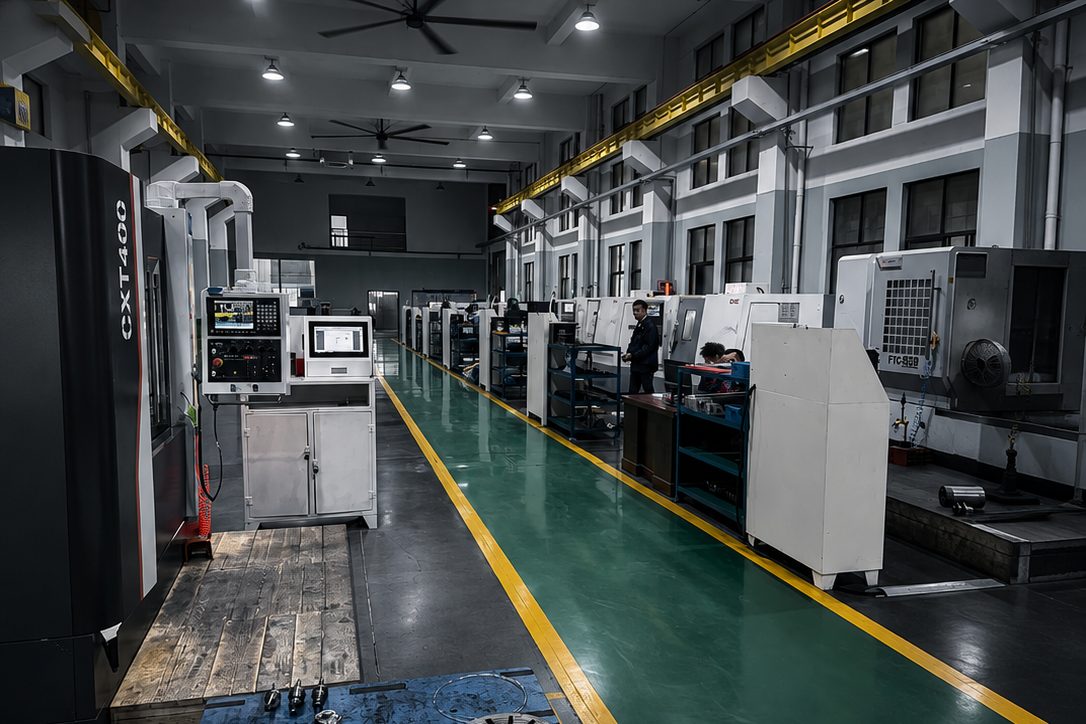
The task is matched to confirmed partner capability, available equipment, and experience with comparable parts. Result: a site selected for the process, not simply the lowest price.
Sample
We launch a first article or trial batch and verify geometry, surface, material, and repeatability. Result: a route proven before serial production.
Serial production
The batch moves through agreed operations and in-process checkpoints. Result: production without hidden deviation accumulating between stages.
Inspection and release
We complete final checks to the plan and review documents, marking, and packaging. Shipment is released only after approval. Result: a batch supported by evidence.
Logistics and acceptance
We arrange international transport, support documentation, and remain involved until the customer has a clear result. Result: not merely shipped cargo, but an accepted delivery.
Problems do not only occur inside operations. They occur between them.
02 / Belarus
Between Asia and Europe:
not a layer. A control point.
Belarus is the engineering and commercial point of responsibility in the ITM Technology route: one contact, aligned requirements, document control, and customer support within a familiar business environment.
03 / Geography
More than 20 destination countries
We build supply routes for customers in Belarus, Russia, Europe, and Asia. The logistics model is selected for the product, batch, documentation, and destination requirements.
Change is not a failure when it is controlled. A change of material, site, operation, or timing is first assessed for its impact on quality and documentation. Significant changes are approved before implementation, and the decision history remains with the project.